


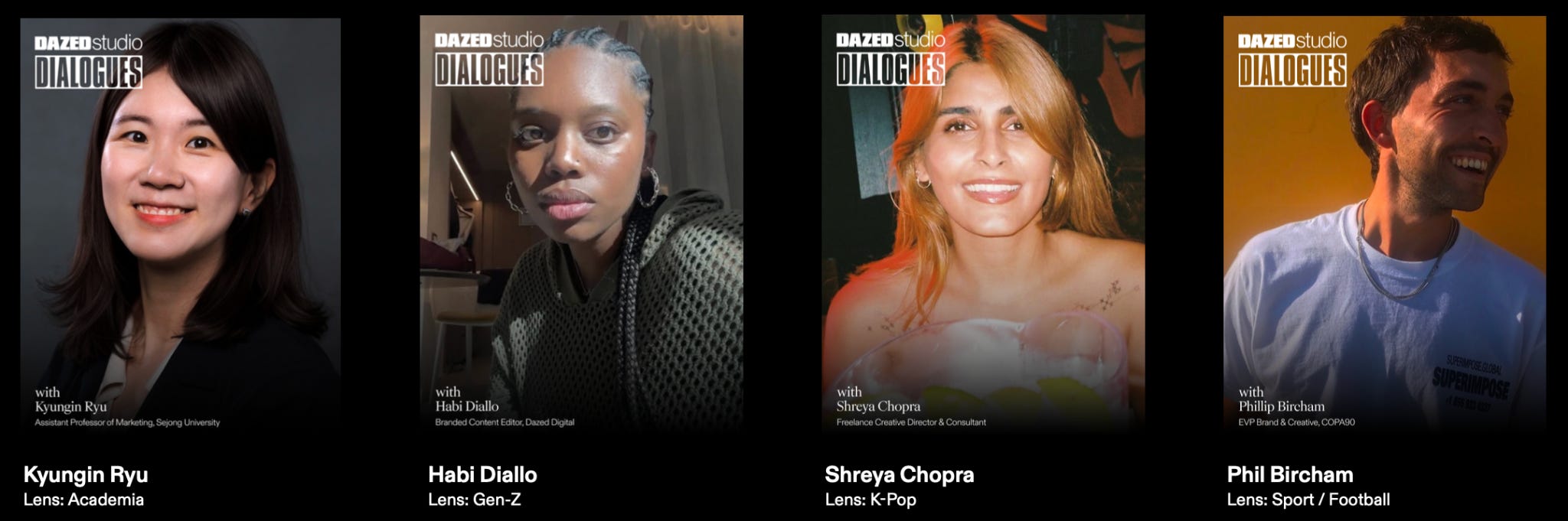
Last Wednesday, Dazed Studio hosted Dazed Dialogues: Brand Lore, bringing together voices from across academia, K-pop, sports and editorial. Hosted by Izzy Farmiloe, Global Head of Strategy at Dazed Studio, the conversation featured Kyungin Ryu, Assistant Professor of Marketing at Sejong University; Shreya Chopra, independent creative and strategist; Phil Bircham, strategist and EVP Creative at COPA90; and Habi Diallo, Dazed’s Branded Content Editor.
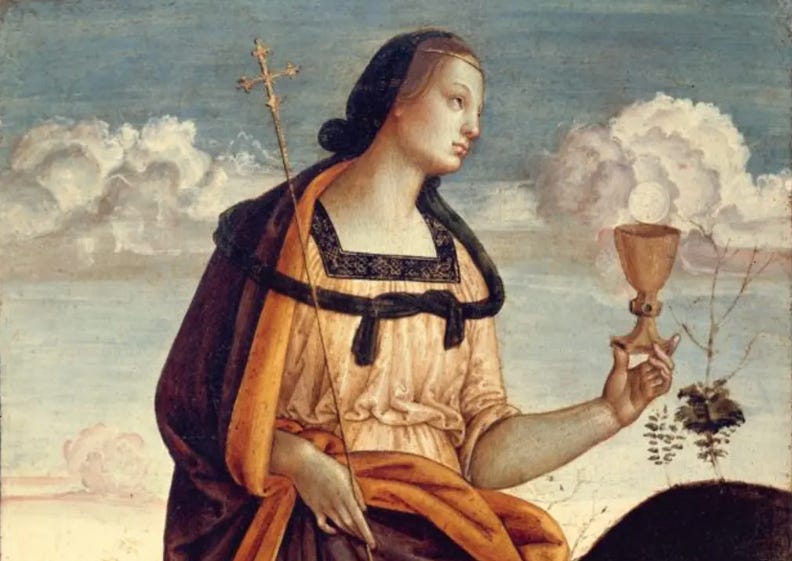
According to Sprout Social, Lore was the social media word of the year. If stories are what drive and shape our society, lore represents something even more powerful: a body of traditional, cultural or historical knowledge and stories about a specific subject.
While lore has always been a powerful form of cultural currency, why is there such an allure to cult-like branding today? Maybe it’s no surprise, considering the state of uncertainty we seem to be living in now. We are all seeking a sense of certainty, belonging, and purpose – something that lore, and even cults, can offer. It’s about finding something to believe in, and something bigger than ourselves to belong to.
This translates directly into the relationship between brands and consumers. In this conversation, the panel explored modern fandom through the perspectives of academia, K-pop, sports and editorial. If you missed our livestream, here are some takeaways.
01 BRAND FAITH IS BUILT TOGETHER, NOT DICTATED FROM ABOVE
Kyungin, whose research explores consumer brand faith through the examples of Tesla and Apple, shared an interesting perspective: brand faith is co-created between the brand and its consumers.
She outlined three phases in the development of brand faith. It starts with Phase 1: Enchantment, where people are drawn in by a brand’s vision, storytelling and promise. This moves into Phase 2: Doubt / Reflection, where consumers develop strong beliefs but begin to question and reassess their faith. Finally, in Phase 3: Justification, consumers move beyond their doubts and find renewed faith in the brand’s purpose and future potential.
As Kyungin explained, the element of hope plays a particularly powerful role:
We found that people find faith in brands that create stories of hope tied to the future or contributing to creating a meaningful future. They are linking their existential needs and existential satisfaction…
[Brands] need to have strong storytelling to deliver that hope for the future. They also need to consistently provide high quality products, which deliver those gospels or stories..
02 YOU CAN MANUFACTURE LORE, BUT YOU CAN’T FAKE AUTHENTICITY
For every piece of lore a brand leans into or adopts as part of its identity, where does it originate? If not every brand has a dramatic, one-of-a-kind founding story to tell, can lore be deliberately manufactured? And if so, how?
Shreya, who has worked closely within the K-pop industry, offered an interesting perspective through the lens of K-pop:
It can be manufactured, but it really is a two-line tent pole: the manufactured lore, and the authenticity of the product itself, which in K-pop is the artists. The lore has to work in tandem with the authenticity of the artist.
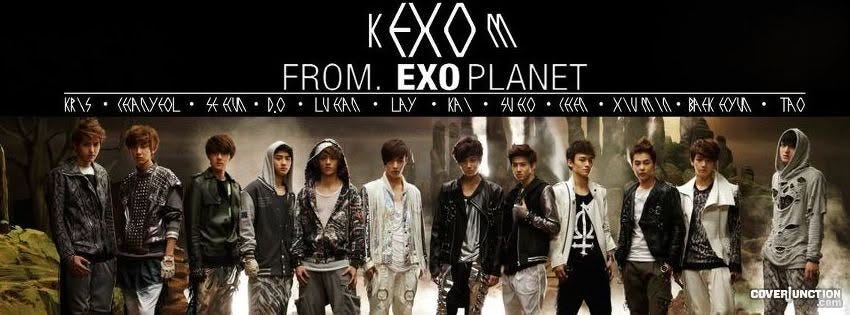
This took me straight back to my own K-pop era in high school. One of the first K-pop groups I really invested in was EXO. As teenage fans in China, we learned that each member was a celestial being from an exoplanet, sent to protect the balance of the universe, with their own powers and personalities woven into the story.
As a brand, or K-pop band or group grows, the question of dilution inevitably comes up: how do you evolve without betraying the original lore? Shreya noted the distinction: dilution means moving away from the original cause, while evolvement is about making the world you’ve built more accessible to others.
You can build brand lore from the bottom up, no matter what level you’re at.
I do think lore can evolve overall... there’s this idea of accessibility. Any cult brand, if you really think about it as an organism, should want to grow. Ideally, if you’ve trained your disciples well enough, they should want to grow as a group on their own.
There’s cultness, which has this gatekeeping quality, and there’s true disciple-hood, which is about growth.
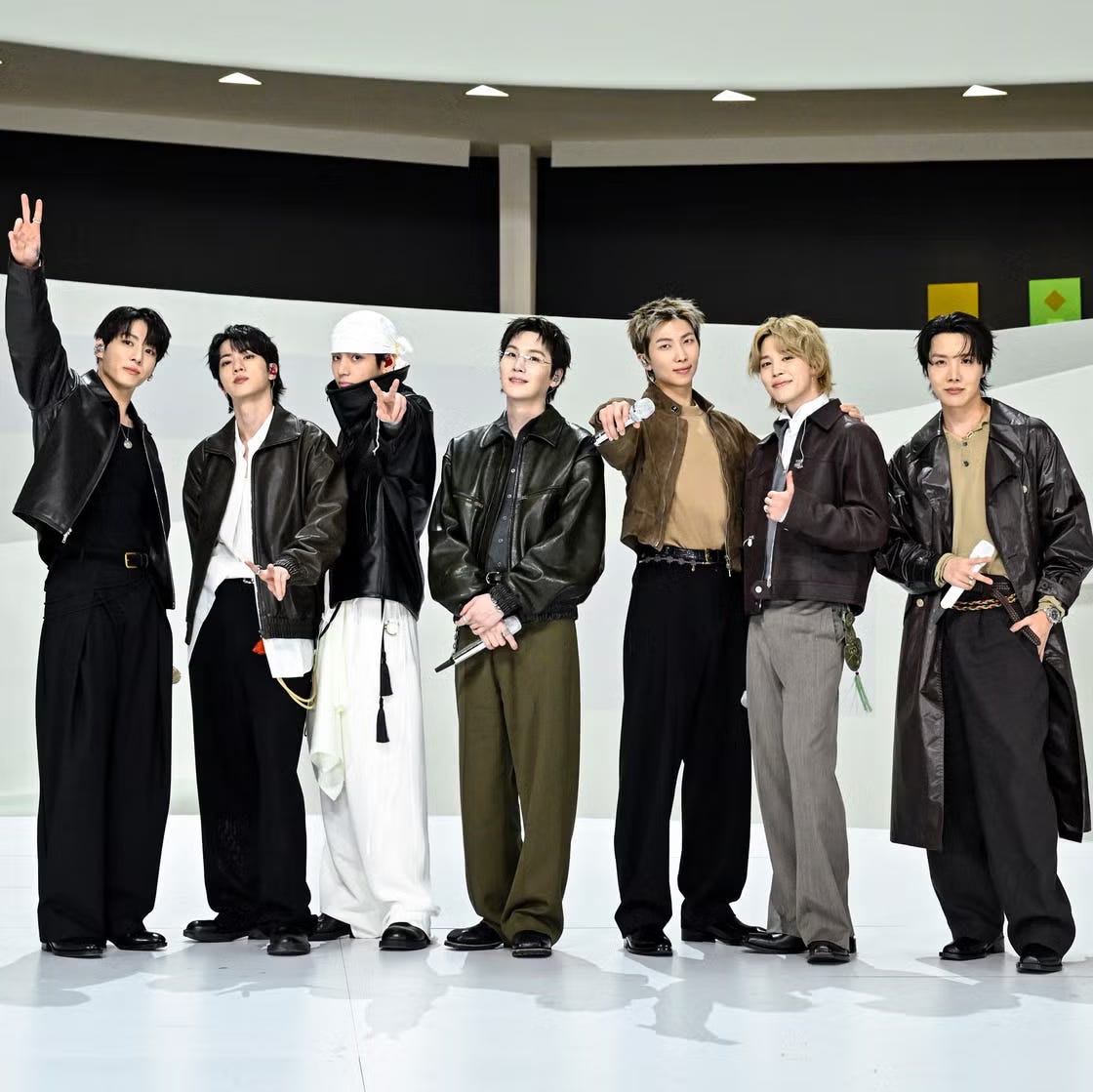
Another great example in K-pop is BTS. Over the years, I’ve met so many BTS fans, and what has consistently stood out to me is how welcoming they are, always eager to share why they love the group and what makes the members so special. There’s very little gatekeeping. Even as BTS has grown into a global phenomenon, longtime ARMYs (the name for BTS fans) don’t necessarily see newer fans as outsiders. They stand in the same arena, screaming and sharing the same love for the group.
This brings me back to something Shreya shared about what she has learned from K-pop fans:
if you truly meet a disciple of any group, they’re not gonna turn you away and say, oh, I’m not sure this is for you. They’re gonna welcome you in, invite you into the lore, teach you the teachings of that group and really have you want to be invested from the jump.
The strongest fandoms would invite people in, instead of keeping them out.
03 FANDOM IS MORE THAN SOMETHING YOU BUY; IT’S SOMETHING YOU DO.
Sport is its own kind of arena: an almost ritualistic experience for both players and fans.
Similar to K-pop, there is so much lore surrounding each player, particularly when you consider the years of training, physical discipline and everything that goes into their performance throughout the season. So much of the lore lies in these backstories: the journey, the sacrifices, the setbacks and ultimately, the achievements.
As Phil mentioned, for sports fans, the physical act of gathering together and experiencing a game is almost ritualistic. And perhaps this is exactly what we need, especially at a time when chaos seems to be the only constant. At the same time, there is an undeniable unpredictability to the game itself. Fans walk into an arena with hope, a powerful sense of hope that can sometimes feel harder to find in other areas of life.
There is something interesting about this balance: the familiarity and comfort of a shared ritual, alongside the unpredictability of what might happen next. And even when the outcome is uncertain, fans keep showing up, carrying that hope with them because they are already so deeply invested in the lore.
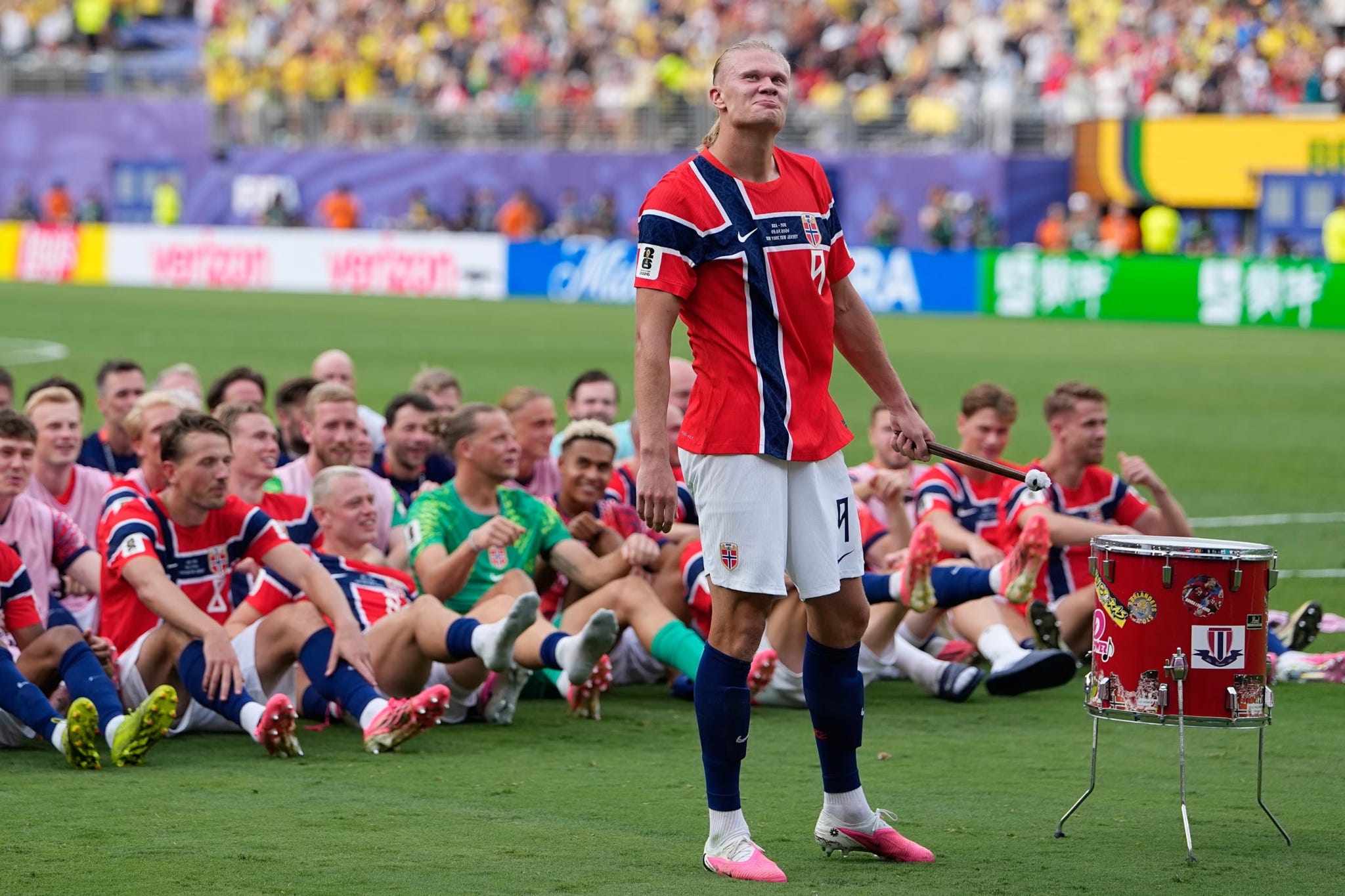
Team sports such as football and basketball are where lore and fandom are so tightly intertwined. Even as someone who isn’t much of a sports fan myself, the ritualistic experience of watching the World Cup and the NBA (Knicks in five!) in New York City this summer has been truly phenomenal.
Phil also pointed out an interesting paradox emerging in global culture at this moment.
If you take the football shirt, it doesn’t necessarily belong to football anymore; But also football has left the shirt.
It’s being traded as a commodity, this fandom, people starting to mix and match different clubs and different players, following players over clubs.
The challenge is how do you create a kind of like engaged investment in that fandom when it’s being traded as a commodity now on a surface level.
04 STOP SELLING PRODUCTS, START BUILDING CULTURAL MEANING
Dazed’s very own branded content editor, Habi Diallo, shared that the effective branded content succeeds when it leads with authentic, human-centric storytelling rather than overtly pushing a product, thereby weaving the brand naturally into the cultural conversation.
Most of my time is spent trying to find that middle ground between an organic Dazed point of view and the branded content. It’s always gonna have an in-partnership tag, but you don’t want it to stand out beyond that because then it defeats the purpose which is to have young people read about these events, products or activations naturally. And that’s what our audience has always been: young people who are interested in the world.
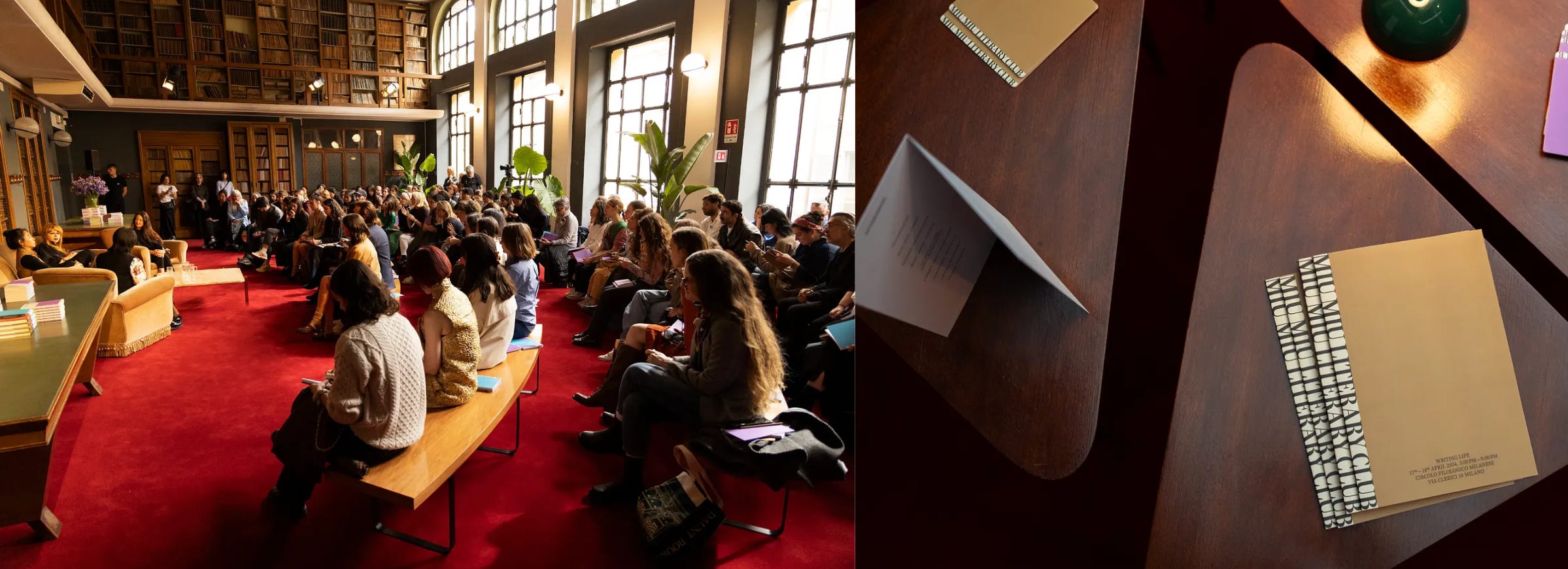
Habi also shared that one brand she genuinely has faith in is Miu Miu, largely because of everything the brand does beyond its products. From the Miu Miu Literary Club to its conversations with female creatives, authors and filmmakers, these initiatives extend the brand into culture in a way that feels authentic and deeply rooted in Miuccia Prada’s own interests and worldview.
IF YOUR BRAND DISAPPEARED TOMORROW, WHAT WOULD CULTURE LOSE?
Ultimately, all of this comes back to the fundamental and existential needs of people – the desire for belonging, purpose, certainty and hope.
Not every brand needs to become a cult, and belief isn’t something that can simply be engineered. But brands can create the conditions for it: by knowing what they stand for, making something genuinely worth believing in, and giving people a reason to become part of a bigger story.
As our conversation came to a close, one question from the conversation remained: If your favorite brand disappeared tomorrow, what would culture actually lose?
This might be the real measure of Brand Lore.
You could also watch our full recording here on our Dazed Studio Youtube