


GTA VI IS A RARE MONOCULTURE MOMENT
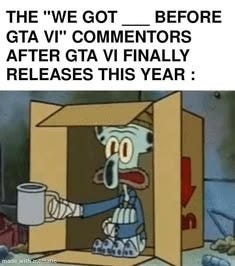
Today marks the last day that any of us internauts can say we got *something* before GTA VI, because as of tomorrow, November 19th, Vice City will finally return to consoles, after a thirteen year hiatus, with the release of Grand Theft Auto VI.
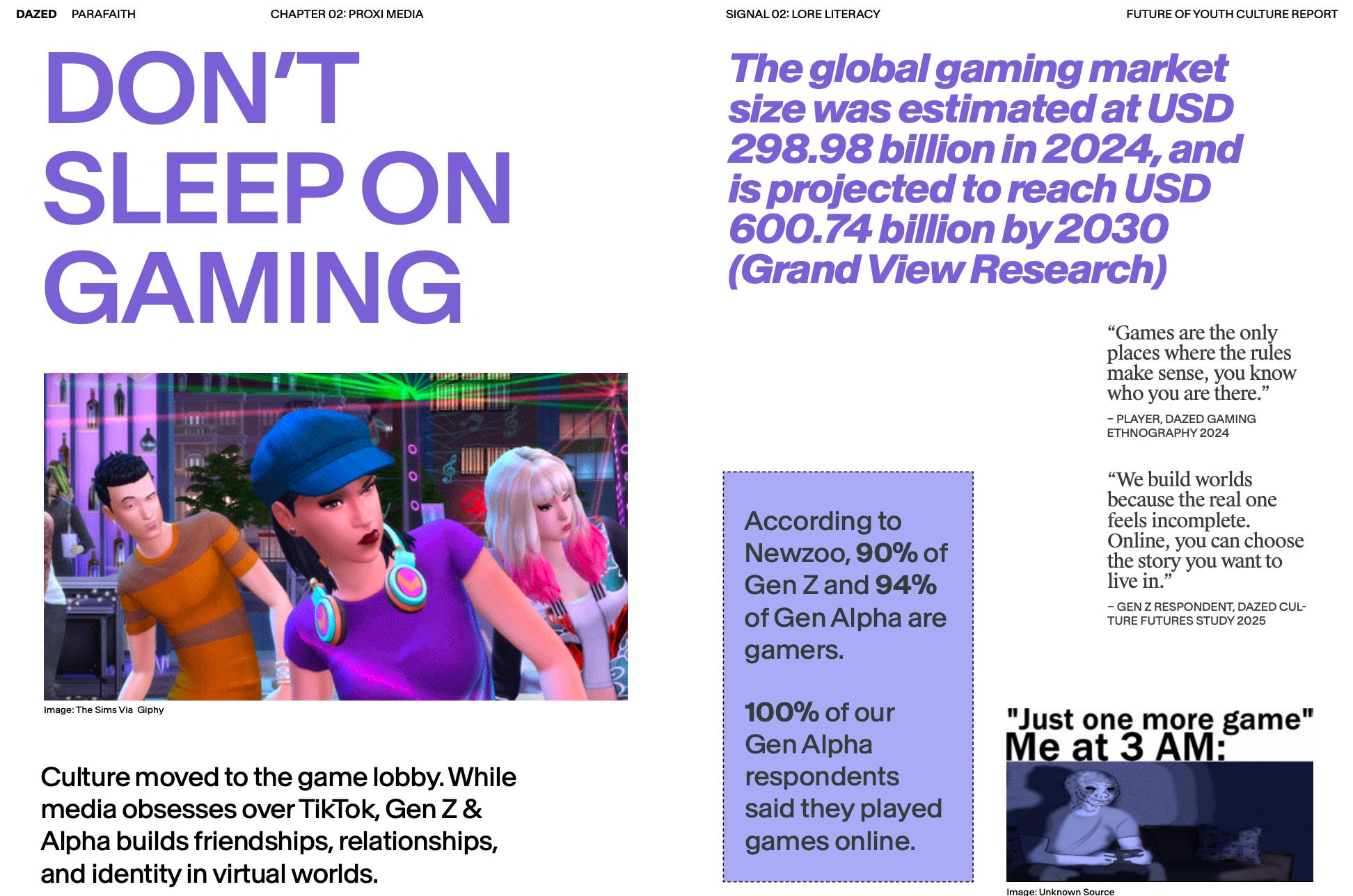
Last month, we launched our latest white paper PARAFAITH: The Future of Youth Culture. Through original research across the US and UK, expert interviews and global cultural analysis, we learnt that 100% of Gen Alpha respondents game. Our latest GTA Dazed cover is evidence that gaming can produce that rarest of things — a monoculture moment.
And from the collective pandemic craze of cozy-gaming with Animal Crossing to taking annual leave to play GTA VI, what was once dismissed as a solitary, sedentary pastime has become a powerful engine for community and self-expression. Beyond connection, meta-realities offer a space to rehearse (or perform) versions of life that can feel increasingly out of reach IRL, from homeownership to running a farm or raising pets, building families and experimenting with adulthood.
AND BEFORE IT’S EVEN LAUNCHED, THE GAME IS ALREADY IN A GRAND GENERATIONAL RUN
Few video games have been able to occupy the cultural imagination of multiple generations quite like the Grand Theft Auto franchise. Since its first iteration in 1997, Rockstar Game’s golden goose has proven to be much bigger than a gaming experience. GTA V famously occupied the title of highest-grossing single media product across all entertainment categories (proving that audiences would much rather take Los Santos questionable side quests over saving the neon lit Pandora - sorry Avatar enthusiasts).
Now, the highly-anticipated launch Grand Theft Auto VI is currently undergoing what we like to call *a generational run* in culture.
THE VALUE OF A VIRTUAL WORLD IS MEASURED BY ITS REAL-WORLD IMPACT
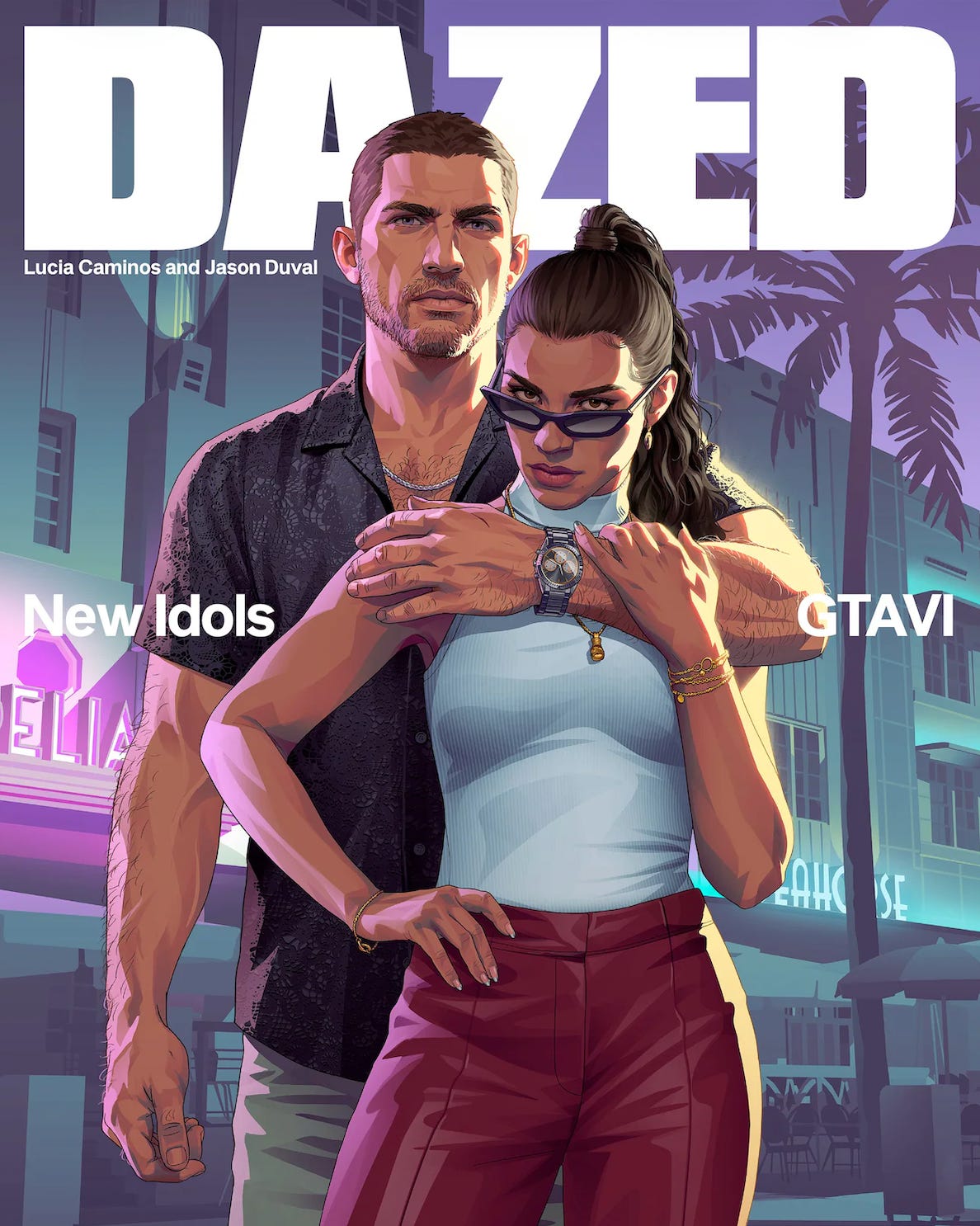
We’re witnessing a new era of digital IP, where the value of a virtual universe is measured by its ability to influence culture, commerce and audience behaviour in real life. From editorial coverage — like our “New Idols” GTA cover of Dazed earlier this autumn — and experiential retail takeovers, guerrilla activations across Miami to an entirely dedicated music festival, Vice City’s meta-reality is a lesson in the power of real-world cultural marketing.
CASE IN POINT…
Editorial Amplification: Dazed New Idols Issue
Dazed’s exclusive GTAVI cover story was the magazine’s best-performing cover story on record. Our in-depth preview of GTA VI was read by over 500k people. Coordinated amplification by Rockstar Games generated nearly 790,000 likes, with external press coverage driving an additional 1.6 million social engagements. And online pre-orders for the magazine sold out in under an hour.
Retail Amplification: Selfridges x GTAVI “Vice City” Cornershop
A strategic retail takeover in collaboration with the iconic department Selfridges translated the game’s universe into the physical realm. Recognisable in-game iconography such as the supercars, a teal and hot pink ombre Ferrari specifically, and the iconic Vice City neon signs were brought to life together with a wide array of merchandise (over 60 unique items) available to purchase.
(Source: @housetomotive)
PR Amplification: GTA VI Recreates Supercars
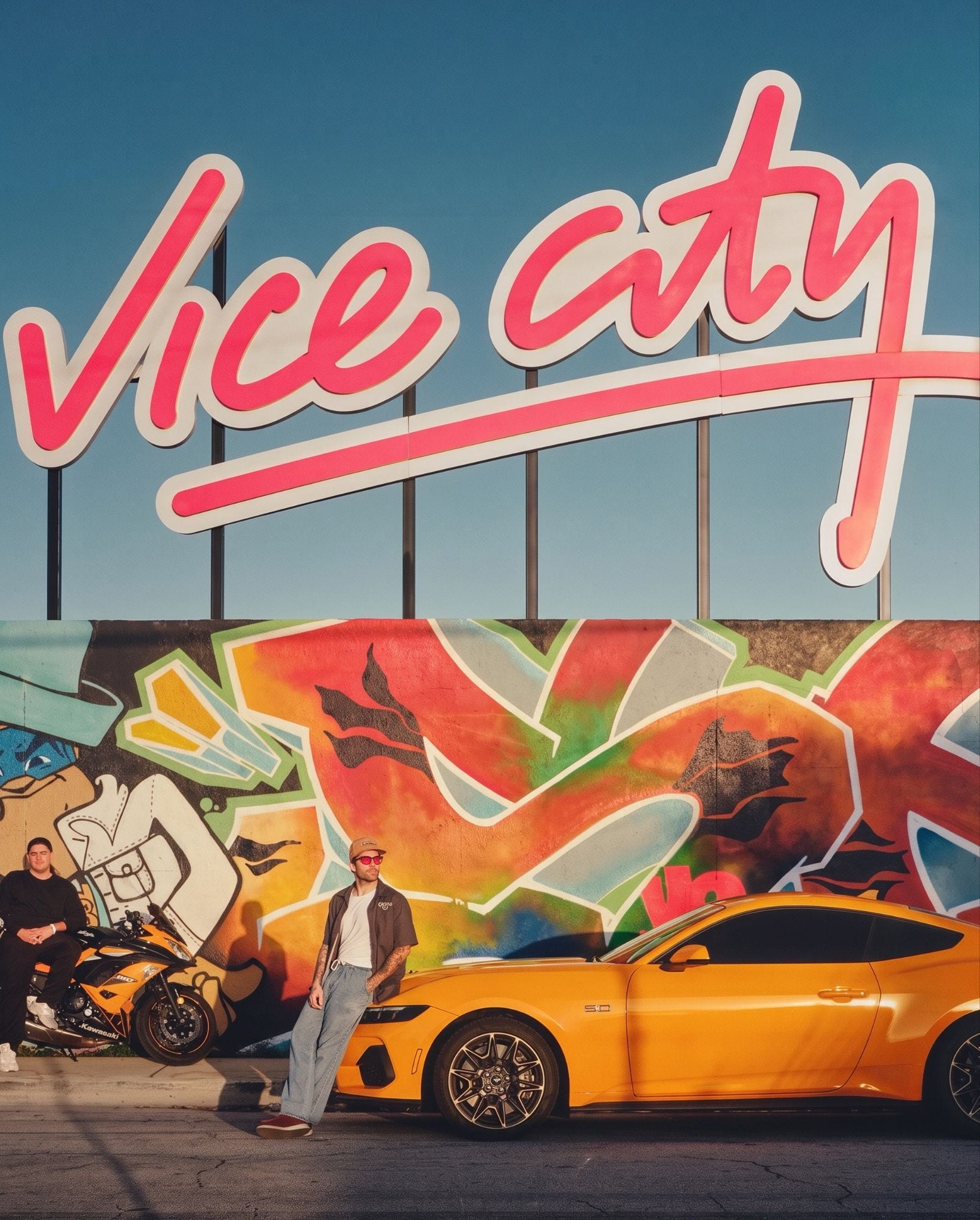
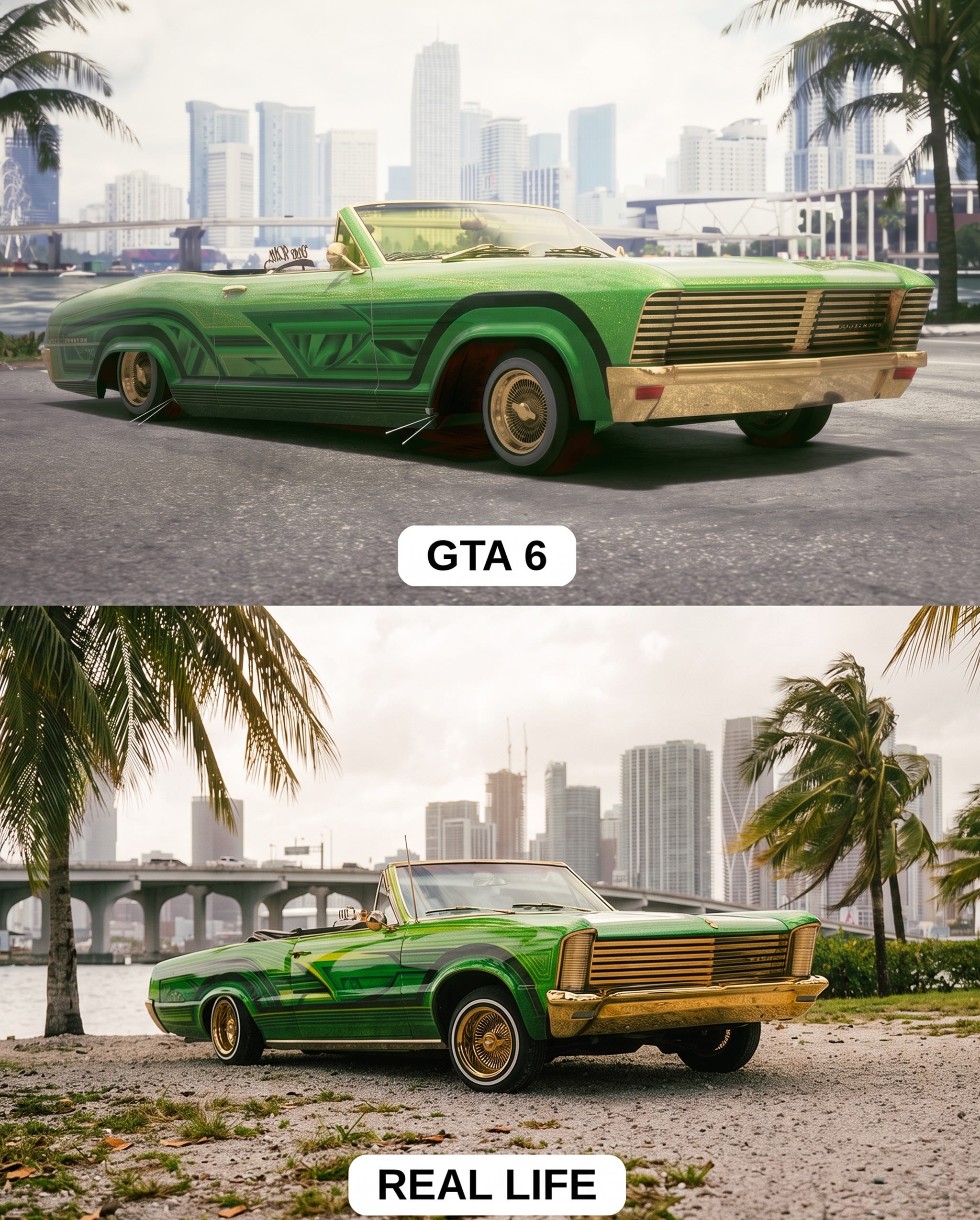
As a guerrilla marketing tactic, the “fantasy” supercars from the game were recreated in real life and spotted cruising through the streets of Miami, bringing the virtual world of GTA into the physical one and turning the city itself into a real-world extension of the game.
(Source: @grandtheftauto6)
A simple yet effective OOH activation saw Vice City-inspired signage appear across Miami, making it the perfect photo-op opportunity for UGC content and organic discovery.
Experiential Amplification: GTA VI The festival
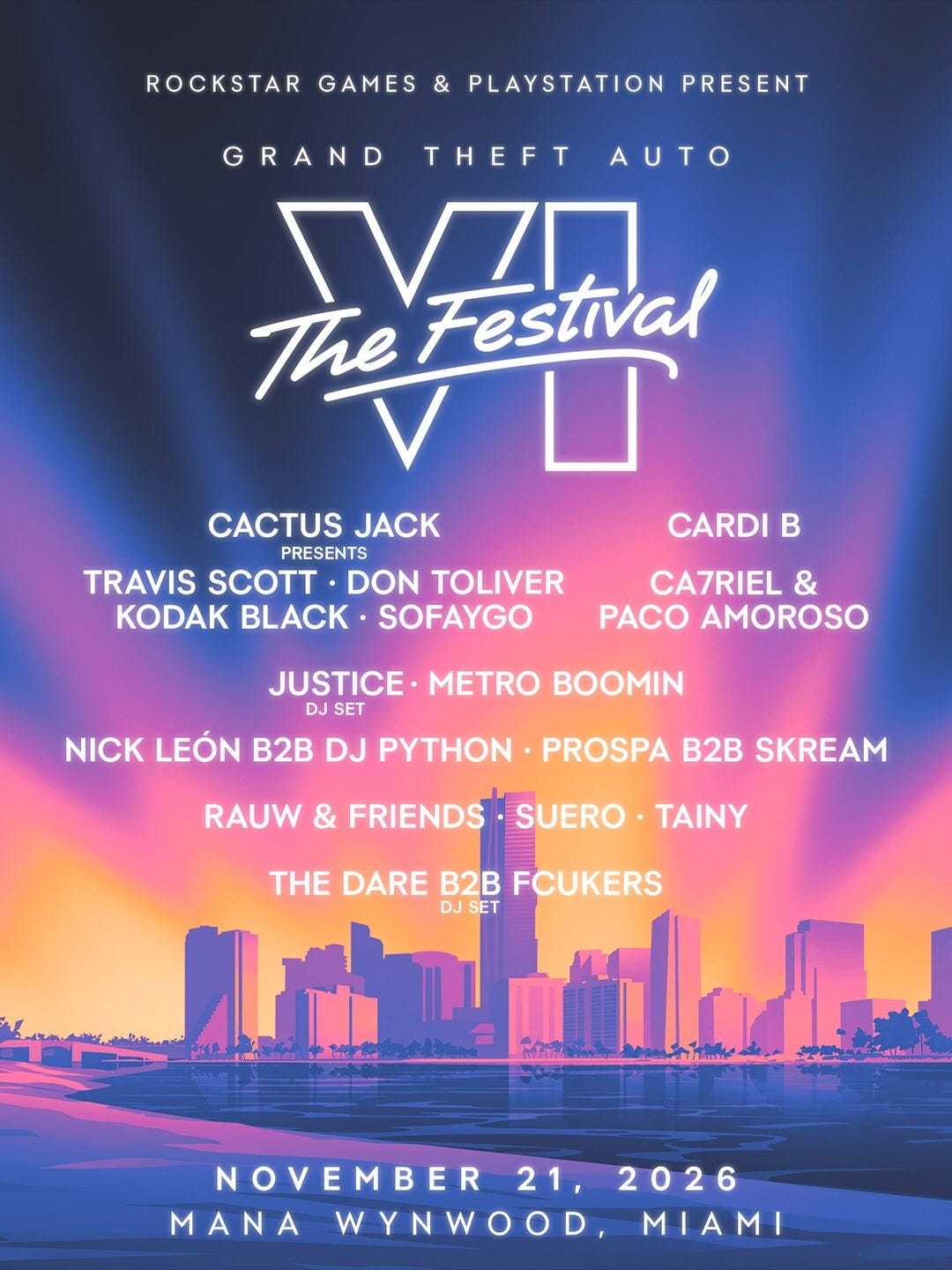
A real-world extension of Vice City’s sound system, the GTA VI Festival is marketed as a two-stage celebration at Miami’s Mana Wynwoodof bringing together artists such as Travis Scott, Cardi B, Metro Boomin and Justice.
BUT HOW DID WE GET HERE?
GTA VI demonstrates how a gaming universe can become a cultural asset with potential for application across multiple adjacent markets such as music, commerce, entertainment and tourism.
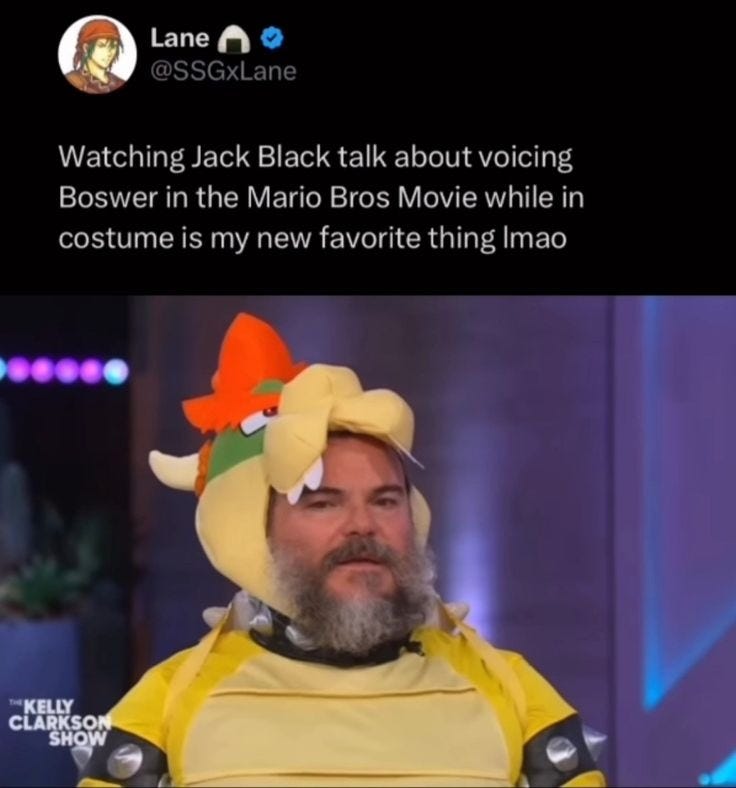
This isn’t necessarily new. We’ve seen the long tail of virtual IP evidentiate across several fictitious universes. Nintendo has dipped into the cinematic universe with the blockbuster star-studded Super Mario movie franchise (where they tapped Tenacious D frontman Jack Black to voice the malevolent Bowser and sing an original score for the film) to dedicated Universal amusement parks in Japan and America, responsible for an uptick in destination tourism to Osaka, where the first park was housed.
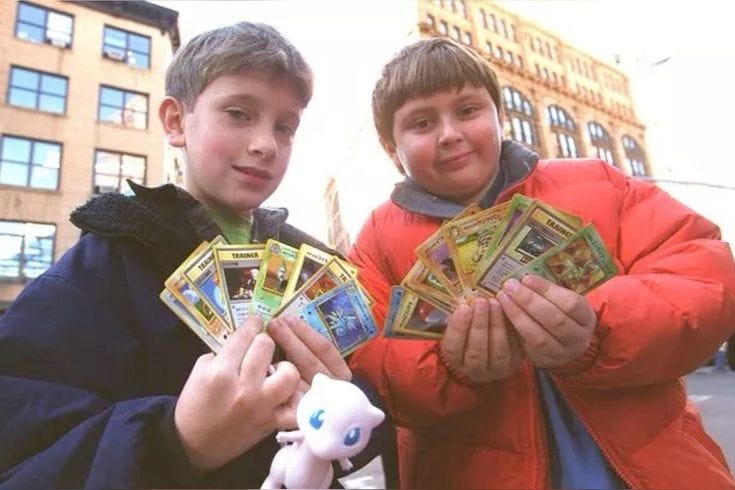
Pokémon is one of the most interesting examples of “phygital” impact. Like Nintendo, the gaming universe expanded into TV with their long standing anime series and even movies (although the same never reached the mainstream to the same extent). Perhaps most famously, Pokémon was one of the pioneers of the “blind box” experience through its mystery trading card packs, building a multi-billion-dollar collectibles market now estimated at over $16 billion.
SO, WHAT MAKES GTA VI’S MARKETING STRATEGY NEW?
The overarching sentiment around GTA VI and what makes this launch a grand generational run is the games ability to transcend its form by building a symbiotic relationship with the real world. It isn’t confined to what happens on screen or in dedicated fandom spaces; instead, GTA VI is positioned as a fictional universe that seamlessly intertwines with the physical world, creating a cultural ecosystem that audiences and businesses can all participate in.
This is evidenced through:
Symbiotic Realism
Not only are players desperate to enter the virtual world of Vice City; they also want that city to be made real. And instead of dedicated, isolated spaces such as amusement parks and niche hobbies (think collectables), GTA VI’s universe relies on “world-building”: making Vice City a destination in its own right as the fictional world of becomes heavily intertwined with the real-world Floridian hotspot of Miami.
For brands, this presents an opportunity to move beyond traditional advertising. Instead of releasing products or dedicated “fan experiences” (which can sometimes land as childish or cringe - we’re looking at you Disney adults), brands are able to build marketing touch-points around the real life and cultural ecosystem happening around them (i.e.GTAVI in-game cars cruising Miami and GTA Festival).
Participation marketing
Perhaps most importantly, GTA VI’s amplification economy relies on participation. Fandom, creators, spectators, retailers and cultural commentators all become part of the ecosystem. Google’s 2026 Culture & Trends report, GTA VI-related pre-release videos have amassed more than 40 billion views on YouTube, demonstrating how the game has become a content engine for creators long before players have even got their hands on it.
GTA VI will also feature its own social media mechanics, with in-game feeds reflecting the viral videos, influencers and online personalities that shape modern internet culture where players will also be able to browse in-game social feeds, blurring the boundaries between the digital lives of Leonida’s inhabitants and the world players explore.
Source: @avazura
IT’S ALSO A TALE OF TRICKLE-DOWN ECONOMICS
Beyond marketing and in-game mechanics, we can trace the game’s influence in culture via its macro-economic impact. Research conducted on Pulse Survey suggesting 23% of respondents have arranged time away from work or study or planned to request it to play the game, 22% were considering food, drinks or takeaways for launch day and 58% expected to watch the game in some form, with many also planning to play, suggesting that fans view the launch as a shared cultural experience (aka cultural reset).
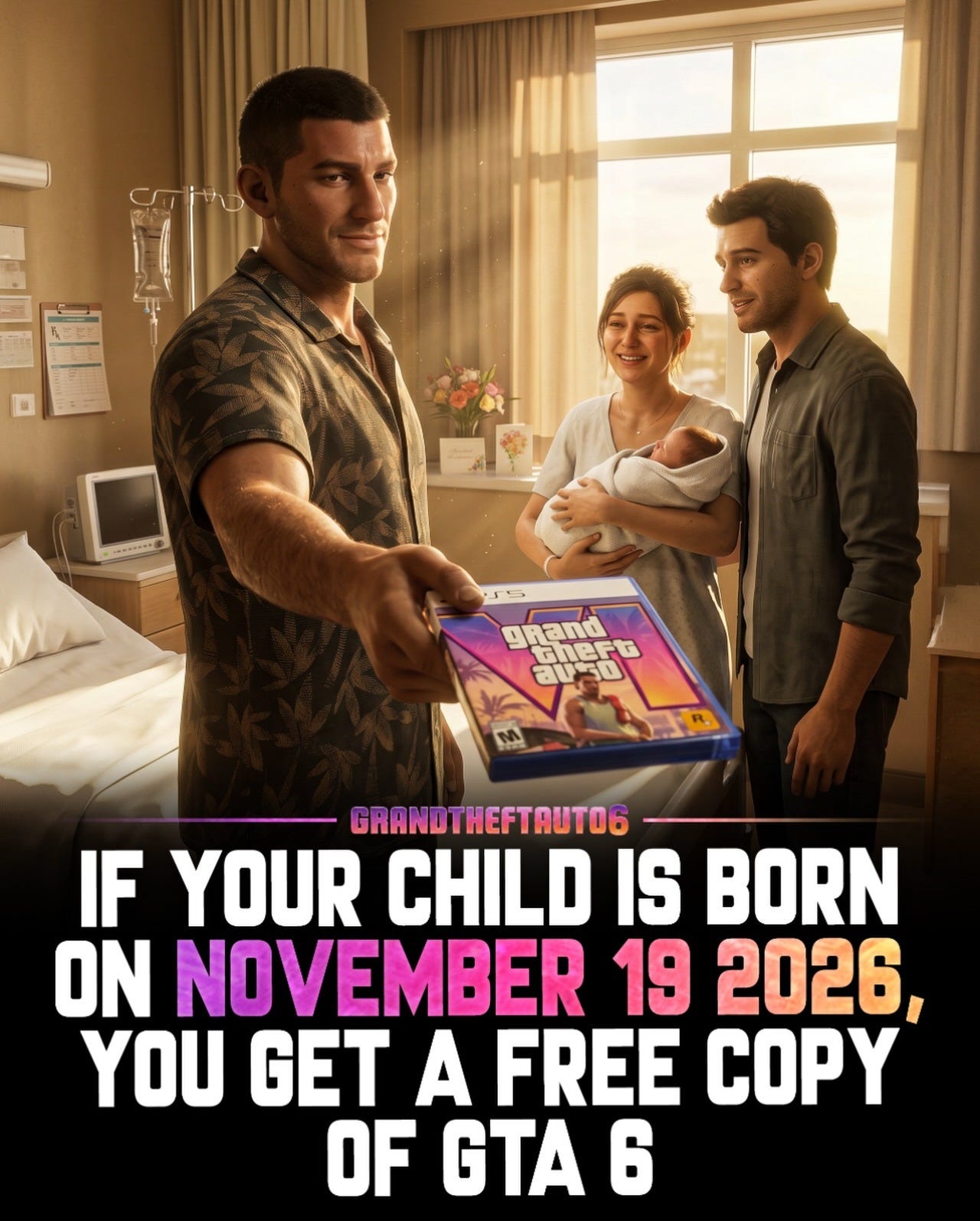
Independent operators such as Norwegian retailer Komplett found creative ways to capitalise on the hype, giving parents whose children were born on release day a free copy of the game, demonstrating how brands outside gaming can insert themselves into a cultural moment.
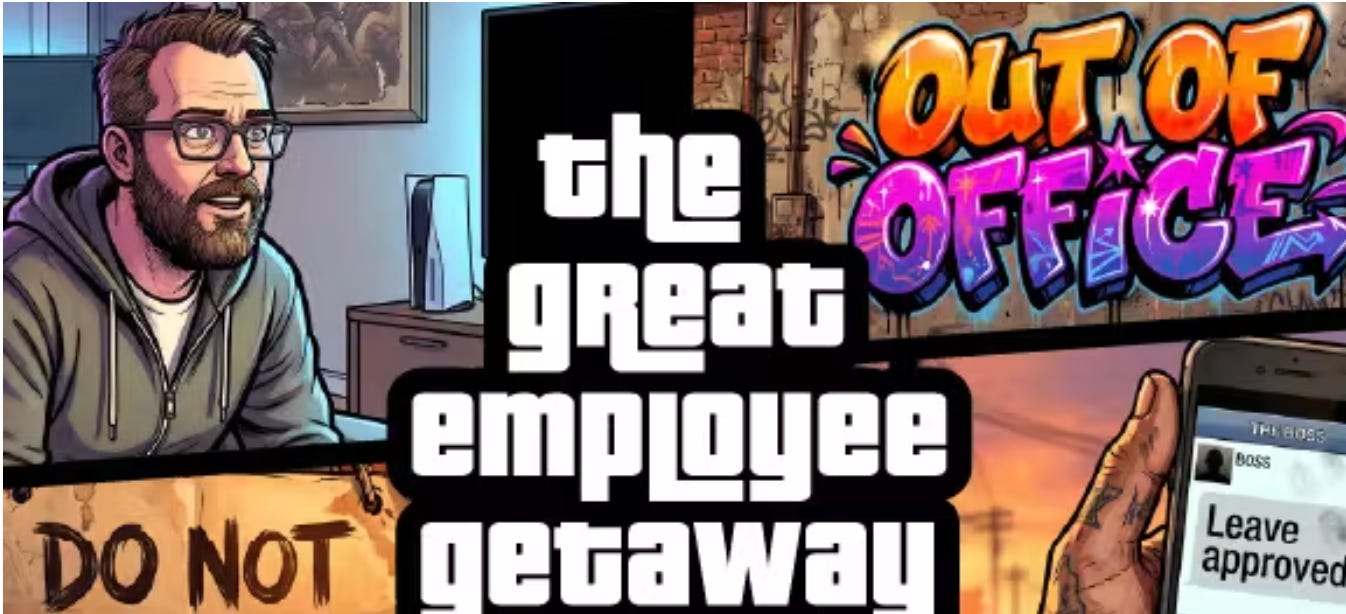
Logitech officially introduced “Logi Game Day”, a dedicated additional paid day off for its employees to play video games, timed just ahead of GTA VI launch in response to the overwhelming number of fans reorganising their lives around the launch. In addition, BrightHR reports that in the UK alone, workers have already booked eight-three-thousand days off specifically for GTA VI across this month and next).
AUDIENCES ARE CRAVING FANTASY
What is driving audiences to crave this seamless movement between digital to physical worlds? Perhaps, it comes down to our growing desire for escapism.
In Gore Verbinski’s 2026 dystopian AI film Good Luck, Have Fun, Don’t Die, there’s a scene where (spoiler alert) Tim, a former anti-tech anarchist, makes an abrupt decision to exit physical reality entirely after a week spent immersed in the simulated world of a VR headset. He decides to move into a facility where users remain permanently plugged in. When Ingrid, Tim’s love interest, pleads with him to stay with her in the real world, she confesses her love. “It’s not enough,” Tim responds. Ouch.
When reality has a habit of crashing back in, and we find ourselves living through a seemingly endless state of perma-crisis, it’s unsurprising that audiences don’t want the world of the game to end when they log out.
Where Nintendo and Pokemon thrived in creating dedicated “fandom experiences” and products (origin films and tv series, amusement parks and collectable memorabilia) the new frontier, which GTA VI is already masterfully expanding into, is following where culture already exists — in the worlds of fashion, music, sports, automotive — and how culture is already being communicated — via social media, collectives and fandoms.
Instead of enabling escapism across isolated touch-points and products, this new approach paves the way for brands to shape cultural ecosystems that can transcend rigid categories to show up wider culture, keeping audiences immersed without having to ever exit the fantasy.