

You’re ideating your next campaign; who to cast, what’s the angle, who’ll be interested in writing about it and what will actually move the needle. The latter often necessitates taking a creative risk, working with someone new, reaching into a new cultural territory via a brand partnership. Partnerships have become a shortcut to cultural credibility: generating headlines, introducing your brand to new audiences and making even the most unlikely product feel desirable and while ROI is a concern, naturally the biggest risks in the name of cultural relevance often yield the biggest reward. Every brand wants to be culturally relevant but when everyone is collaborating with the same designers, tapping the same tastemakers and chasing the same communities, what does relevance actually mean?
The brands that get ahead and stay ahead are choosing partners that haven’t been universally vetted. The people and ideas that go on to shape tomorrow’s culture are often most valuable before the masses nod in consensus.
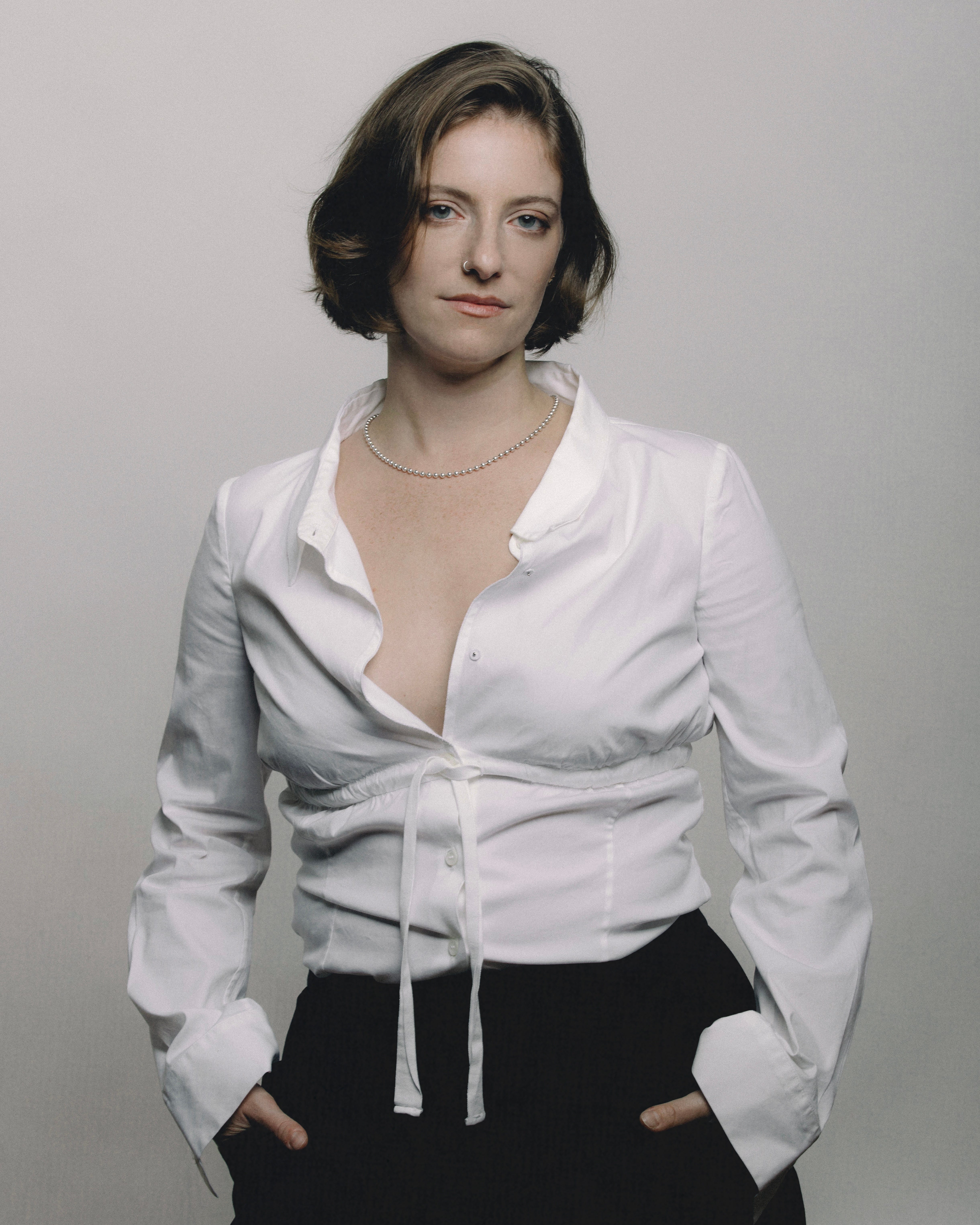
Paige Landesberg, Founder of New York City-based partnerships-agency, The Carpool Group, has made partnerships her life’s work. Initially primed to serve a diverse roster of emerging fashion designers. The Carpool Group works across disciplines to identify and then secure partners for their designers (which often looks like “big” brands), whilst then going on to manage these relationships to build bridges, not just moments. We spoke to Paige about the limits of earned media, why the most interesting partnerships aren’t always the most obvious, and what it takes for brands to stop borrowing cultural relevance and start building it.
THE BUSINESS OF CULTURAL RELEVANCE
Lindsey: Hi Paige! Can you introduce yourself and tell us a little about The Carpool Group and how the agency came about?
Paige: I feel like my business is constantly reinventing itself and there’s just never a dull moment. I am the Founder and President of The Carpool Group, a fashion partnerships agency.
When I started, the mission was to build revenue opportunities for emerging designers and because of that, we are very trusted in the New York fashion community by designers and creatives.


As we’ve grown over time, we’ve become very sophisticated at understanding what is the ROI and how we communicate culture through qualitative and quantitative value to these bigger, corporate brands that really speak a totally different language.
The structure of how we work is building partnerships between a fashion designer or a fashion brand and a brand that is not in fashion but is interested in capturing the attention of trend-focused consumers to establish cultural relevance through brand awareness, storytelling and narrative.
We work with brands across a really diverse range of categories, everything from tech to beverage to footwear. We’ve worked with Red Bull, Nike, MAC Cosmetics, Tinder and Google.
Fashion is this niche space that we are experts in, we’re connected to a really powerful and impactful community of designers that come into these partnerships and become creative directors, community builders, social media talent, you name it.
Lindsey: Whenever we see a brand like LUAR landing a Lyft sponsorship or Women’s History Museum designing graphics for Supreme, I always wonder who’s actually benefiting and in what way. Independent brands gain exposure, bigger brands gain cultural relevance. But how do you measure the value of that exchange?
Paige: The designers that we work with keep us honest in the sense that they do not want to do some corny, lame, weird partnership that doesn’t align with their artistic vision; whereas an influencer, or a corporate brand may be very elastic and be like, you can put me in a clown suit if you pay me a certain amount of money.
The designers we work with have very strong concepts, aesthetics, and customers that they are specifically interested in and speaking to and we have to honor that in the way that we conceive of and sell in partnerships.
They are arbiters of taste, they are the culture in my opinion and bigger brands benefit from the level of authenticity shared with them. For example, we’ve been working with Jane Wade running her partnership since day one, and her most recent runway show was titled The Riverbed.


It told the story of this woman who is leaving her corporate job, wanders into a creek and falls into a waterfall after a hike so we built a partnership with Keen. Keen is a water shoe and it isn’t inherently a fashion product but Jane had this vision for how both aesthetically and conceptually, it could fall beautifully into the story that she’s already telling.
Jane’s already putting a lot into the production of the show, so Keen can co-invest in a portion of it and come away with gorgeous, editorial assets that look and feel like their own campaign shoot, plus all the earned media around the runway moment. It’s a fraction of what a standalone campaign would cost.
Earned media value with the designers that we work with is a large component because basically any time they activate in the public, it gets written about in the press because the press is organically interested in them.
When we’re talking to bigger brands about what the value is and how they measure that, for me, there are three buckets that are interesting to look at which are press, social outcomes and earned media, the second is content, including campaign assets and usage rights, and third is community and IRL activations where we’re introducing the product physically to the customer in real life.
Everyone’s always on a budget so it’s asking what does success look like for the brands involved in this partnership?
YOU CAN MEASURE THE HEADLINES BUT CAN YOU MEASURE THE IMPACT?
Lindsey: Brands are obsessed with measuring cultural impact, but do you think they’re always measuring the right things? Press, social, community and content are increasingly intertwined. Which of these actually moves the needle?
Paige: I think the conventional, straightforward answer to that question would be the press/social piece.
I was just reading a piece by Imran in BoF the other day and he was talking about how people are so focused on EMV and so fixated on the data around media outcomes but in reality, a brand having a crazy amount of social impressions doesn’t necessarily convert or correlate with the commercial success of the business or the selling of more product, right?
For me personally, I think it’s a tough one because it’s all so brand specific. Some brands really need to improve their luxury positioning, while others want to position their product in a new light.
We’ve done partnerships with water bottle brands like HydroJug, and headphone brands like Nothing Tech, and those are the types of products that aren’t natively in the fashion space, but in the context of a partnership with a fashion designer, you can tell a story about how that item becomes a fashion accessory. For those types of partnerships, assets are hugely important to illustrate this. But for a brand like Google that’s much more abstract, building the in-person trust of users and consumers is much more important than imagery.
I don’t necessarily think there’s a one size fits all diagnosis as far as how people should be thinking about it but what I will say is that when a lot of big brands enter the conversation, they’re not always super specific with what their goals are for the project and that’s information we’re trying to extract.
The best outcomes from these types of projects are really somewhat intangible and experiential where over time, the brand really shifts in the minds of consumers to be something they’re interested in, talking about and trusting in.


Lindsey: I often think the best metric is memory. What do people actually remember when we’re so overwhelmed with content? But building something memorable takes time, and marketers are under constant pressure to react. How do you balance the speed of culture with the time it takes to build a meaningful partnership?
Paige: I mean, I think it’s a scramble, right? Every marketer is doing things at the drop of a coin with extremely fast turnarounds. We’re actually very good at that, I wish we weren’t, but but my Director, Vanessa Quesada and I have built frameworks that we know work and know what brands are capable of what.
In an ideal world, we’d build out long-term frameworks with the bigger brands so these partnerships are planned into their year from the start, with budget set aside, instead of pulled together at the last minute.
As we’ve gotten more sophisticated, we also have strong relationships with the bigger brands that want to be in the mix and they’re coming to us and asking, what should our strategy be?
How much money should we be putting aside for 2027 for this? Can we activate across four different designers during New York Fashion Week as opposed to it being one kind of like a one and done quick moment?
What you said was really strong that the metric of success is really if you remember it and being in the psyche is about continuing to show up in these spaces.
It doesn’t have to be seven figure budget events five times a year. It can be one interesting small, social moment that then grows into an in-person event, that then grows into a product collab, and having the evolution of that over time is what really makes people remember a brand.
Timelines are always everyone’s kind of permanent challenge. There’s no real solution to the speed of culture.


WHEN EVERYONE’S CULTURALLY RELEVANT, NO ONE IS
Lindsey: There’s something interesting about the relationship between investment and risk-taking. Everyone talks about taste as the last frontier of self-definition, something you can’t fake. Yet somehow everything looks the same, because everyone is tapping the same people to do the same things. Has the brand partnership become too predictable?
Paige: That’s a great point and something that I think a lot about.
There are a small number of designers who do an insanely high volume of partnerships a year and in my opinion, their partnerships aren’t impactful anymore because it’s such diluted space that they’ve just become advertisers for other brands at this stage and that feels like the opposite of what we do or what we want to do.
We try to really think broadly about what an interesting partnership is and find the people leading the trends in a way that’s artistic and compelling, who deserve more of a platform without being over-saturated to diversify and tell a story.
When every brand wants to work with the same brands or talent is when the market becomes just a lot of noise.I want to see more diverse pairings and unconventional frameworks.


We recently partnered Gabe Gordon with the sexual wellness brand LBDO on a limited-edition toy set for Pride, with an engraved case, lighter and knit pouch designed by Gabe, plus campaign imagery produced by Gabe as well. Gabe’s brand embraces romance and redefines masculinity, and LBDO makes toys you’d want to keep on your nightstand instead of hiding away, which made it a collab that really spoke to a younger audience that doesn’t think in gender lines. I’ve really never seen another project like this in sexual wellness that feels so intimate, yet cool.
Cultural brand partnerships is an emerging category in marketing in and of itself and five years ago, there was just not as much of this happening so it’s a moment where people are realizing you do have to go deeper than creator relationships because that space is so saturated that it means less now. It’s about being able to say wow, I never would have thought of that, but that makes so much sense.
STOP CHASING MOMENTS, START BUILDING STORIES
Lindsey: It feels like brands have become very good at creating moments, but less good at building long-term narratives. A stunt is easier than a commitment, but that’s not necessarily how legacies are built. What makes a genuinely good brand story today?
Paige: First of all, having a niche community makes any story better.
The three things that a story within a brand should be built around are aesthetic, customer, and values. Big brands have the ability to tell specific stories to specific audiences even if their audience is a generalist audience.
Subcultures are culture, even if it’s one that’s not trendy or mega niche trendy, as long as you’re speaking to someone, I think that matters.
With values, have true core values and be true to them in the way that you market but don’t exploit them as the only thing you have.
If you only talk about your values and the aesthetics are not there, no one cares but if you can accomplish telling a story that’s genuinely beautiful, that speaks to a group of people and that holds fast to a value system, that is really the most powerful way to tell a story.


One project I loved that really checked these boxes was a collaboration between Lime - the electric scooter company - and Bronx-based jewelry designer LL, LLC. LL, LLC made a capsule collection from upcycled scooter parts, inspired by iconic Art Deco architecture in the Bronx, which is Lime’s biggest service area in New York. The collection was shot riding around on scooters in The Bronx by an incredible fashion photographer, Joaquin Castillo, and designs were later gifted to influencers.
COMMUNITY ISN’T A MARKETING ACCESSORY
Lindsey: These days every brand seems to need a book club, a film screening or branded matcha at the breakfast they host. Brands have friends, personalities and communities. But community is such a loaded word when it’s also something brands want to capitalise on. How do you engage with a community without exploiting the very thing that makes it valuable?
Paige: In general, the interest and appetite for community is coming with the shortfall of mega influencers because their pages are so saturated and it’s such a pay for play scenario but not only is it transactional, it’s expensive and even if it gets good engagement, it’s very hard to grasp.
There’s a huge resurgence of experiential marketing and trying to come up with inventive ways to show up IRL for communities and I’m a fan of that movement because everything is so fast and increasingly digital that I’m grateful to slow down and be with something in-person.
When you focus on experiential marketing, you’re able to engage micro influencers and these little communities of people that will really bring their friends in and become authentic ambassadors of what the brand is about. They’ll live and breathe it and I think that is the coolest and best thing that can come out of something experiential.


A good example of this was when we partnered Ian Charms, one of the designers we work with, co-hosted a day in Malibu with Salomon Sport Style to launch Salomon’s Nostalgia Pack. Ian Charms creative directed the whole thing as a ’90s summer camp, with activities like friendship bracelet making, a slip-n-slide, custom nail art and s’mores, and every guest was invited to bring a bestie. Both brands pulled from their own communities, so people met each other’s audiences, and because it was fun, everyone posted without being asked. Salomon came away with a whole world built around the Nostalgia footwear, shared by people who actually wanted to be there.
SO, WHAT KIND OF PARTNER ARE YOU?
Brands have become adept at borrowing the credibility of designers, creators and niche cultural scenes. But as the same people and spaces become increasingly commercialised, the value of that borrowed relevance begins to erode.
The problem isn’t that brands want to be part of culture. It’s that too many are trying to get there in exactly the same way.
The opportunity for brands is to look beyond the obvious partnerships, recognise creative potential before everyone else does and invest in relationships that have the chance to grow beyond a single campaign because there’s a difference between being associated with culture and actually contributing to it.
So perhaps the question marketers should be asking isn’t who can make us relevant? What are we actually bringing to the table?