Divided = Attention: What the Beckham Saga Reveals About Modern Media

For younger generations, news is no longer the final word on truth, but the opening move in a collective game of interpretation. We spoke to our Gen Z audience to get their take on the recent Beckham controversy and why it’s created such a universal media moment.
Earlier this week, Brooklyn Peltz Beckham posted a series of scandalous Instagram stories that quickly flooded every feed, whether you cared or not. Amongst his grievances, he accused his parents of prioritising “Brand Beckham” to the detriment of their personal relationship, and claimed that his family "values public promotion and endorsements above all else".
“The Beckham’s are like the monarchy, they’ve preserved a certain image.”
– Sofia, 25
Part of why the drama spread so widely is because the Beckhams uniquely straddle the old and new codes of media. As strategist Zoe Scaman wrote, “Brand Beckham was built in a different era. Glossy magazine covers. Controlled access. Everyone on message. That architecture doesn’t survive when your adult child can blow up the entire narrative in six Instagram stories.” The Beckhams are both a family and a corporation, and there’s something in that ambiguity that appeals to Gen Z’s desire to deconstruct culture as a means of understanding it. Information is no longer passively received but something to actively participate in.
Instantly, memes and theories were circulating group chats, Brooklyn’s Instagram statement used as raw material to analyse rather than something take at face value. As Günseli Yalcinkaya wrote for Dazed back in 2022, “pop culture’s been slowly dying for a while now”, but the Beckham drama finally offered something for everyone to gather around.
“There was no cold, hard evidence of anything shocking but everyone is so desperate to talk about it. Everyone is gagging for something to gossip about. Because it’s such a mainstream story and everyone knows the Beckham’s that’s why it’s united everyone."
– Emilie, 25
In an algorithmically splintered landscape, it’s rare for one narrative to dominate. Yet, the Beckham saga pierced through because it conjured the perfect conditions for debate. For young people, distrust isn’t just a reaction to the media anymore, but the default setting.
“I can’t really trust anything I see in the media from either side of the feud -everything feels strategically planted.”
– Mina, 24
It’s no coincidence that reality TV continues to dominate young people’s viewing habits. Shows like The Traitors tapping into their desire to hunt for clues, scrutinise micro-expressions and construct elaborate theories. So, when celebrity drama spills into real life, they don’t respond as fans, but commentators. The success of YouTube cultural critics like Mina Le and Nicole Rafiee exemplifies this shift and highlights Gen Z’s love of the lore.
“The most interesting thing isn’t the statement itself, but the response to it”
– Emilie, 25
The Beckham saga is what fragmented media looks like in practice. Without a single source of truth, it takes the shape of parallel stories unfolding simultaneously. What it ultimately reveals is a shift in how meaning is produced for younger generations. Stories are no longer simply reported and accepted, but heavily negotiated, while morality is aestheticised into memes.
“Not going to comment on the potentiality of Posh grinding on her own son as that's just none of my business but the memes are funny.”
– Mina, 24
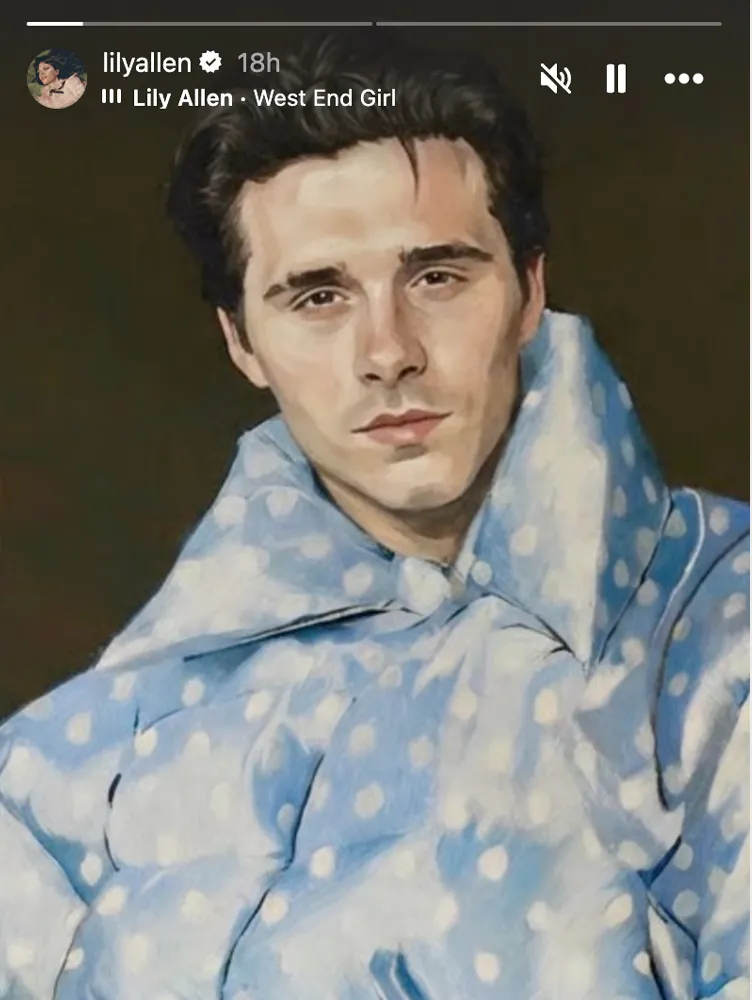
The Beckham saga isn’t just celebrity gossip, but a glimpse into a shattered media landscape where truth isn’t fixed and meaning is crowdsourced. Drama is not only a means of escape, but raw material to be remixed and played with.
"This has been my Super Bowl."
– Sofia, 25
What Brands Can Learn from the Beckham Saga
- Don’t deliver a story, start one
Gen Z treats information as improv material. Drop seeds and tempt them to interpret, remix and expand, rather than just consume. - Truth is a group project
When everything feels like a PR strategy, truth can’t simply be claimed. Let multiple perspectives coexist and show your working. - Embrace the mess
The Beckham saga proves that imperfection travels farther than polish. Brands that show tension, contradiction or unfinished edges cultivate curiosity. - Lore over launch
The best stories today unfold like fandoms, episodic, referential, full of easter eggs. Leave gaps for people to fill. - Design for debate
Virality is only flash in the pan, but participation is sticky. Give people something to discuss about, not necessarily controversy, but complexity and nuance.